Coppice
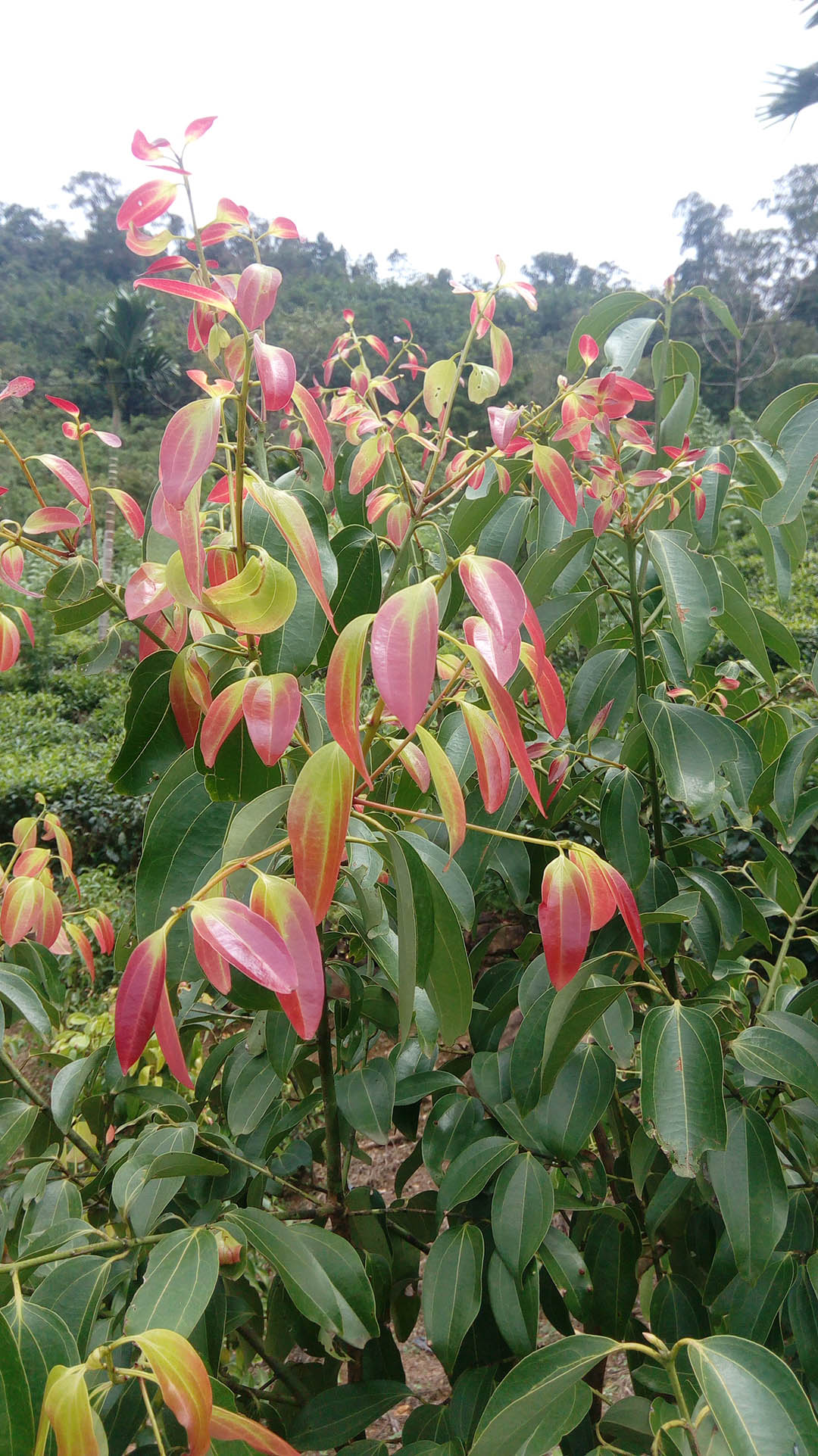
Trees are cut back to encourage a cluster of straight, harvestable shoots.
THE NOBLE BARK
Cinnamomum verum J.Presl
SPICE & SOURCE
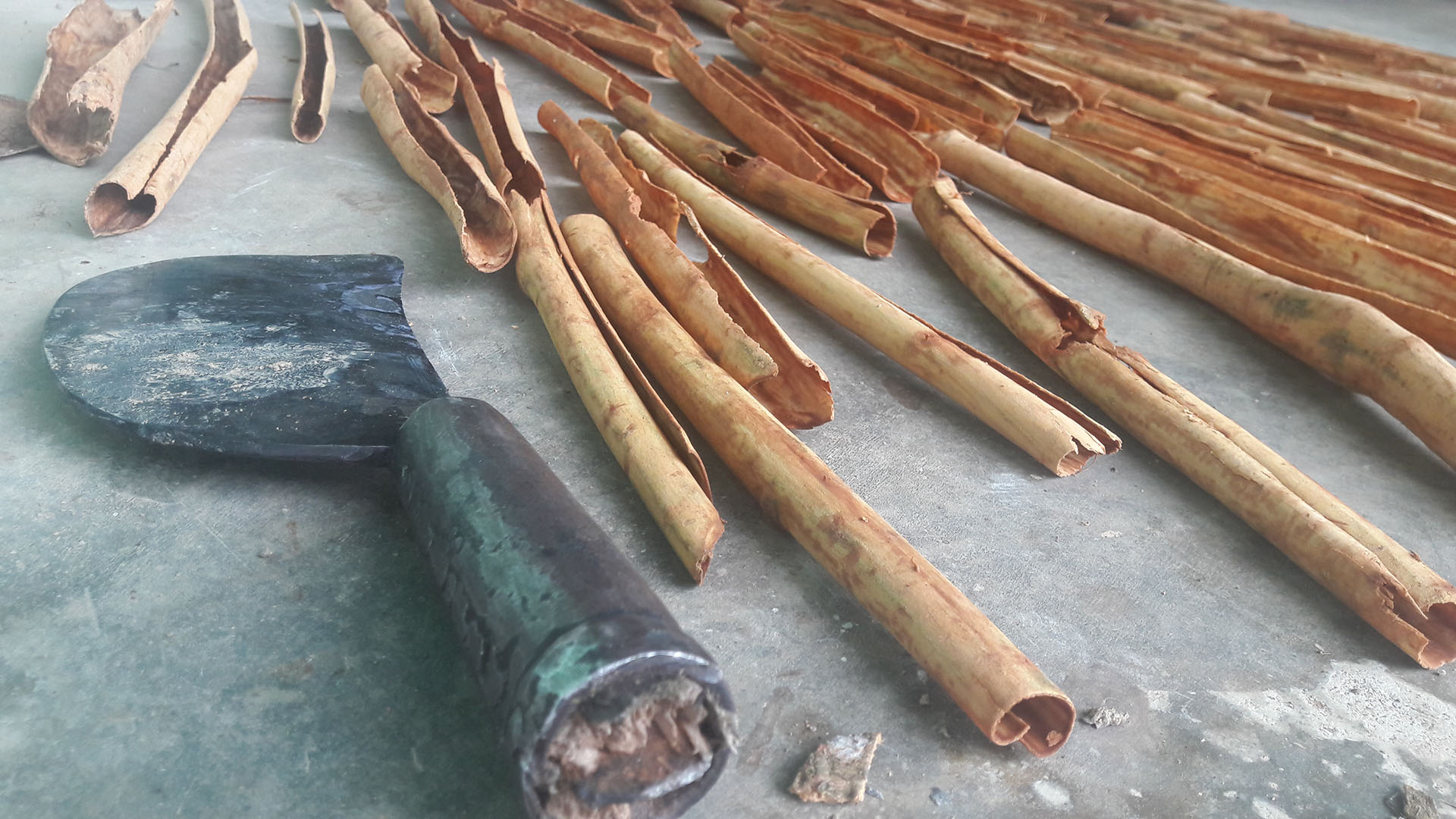
True cinnamon is not a seed or fruit. It is the tender inner bark of young shoots, peeled in long strips and nested by hand into slender, many-layered quills.
TRUE CINNAMON
Cinnamomum verum is an accepted species in the laurel family, native to Sri Lanka. In cultivation it is repeatedly cut back and managed as a many-stemmed bush so that straight young shoots provide peelable bark.
“Cinnamon” can also name bark from several other Cinnamomum species collectively called cassia. They are related, but they are not interchangeable: true cinnamon forms thin, papery layers with a delicate perfume; cassia bark is usually thicker and more forceful.
MANY LANGUAGES · ONE BARK
THE JOURNEY
A compressed route through a much larger story of local skill, ocean trade and colonial control.
Generations of growers and peelers developed the exacting craft that turns fresh inner bark into fine quills.
Arab and South Asian trading networks carried cinnamon toward Red Sea and Mediterranean markets.
Portuguese, Dutch and British powers successively fought to command Sri Lanka's cinnamon trade and labor.
Today cinnamon scents rice, tea, curries, breads, pastries and preserves across continents.
FROM SHOOT TO QUILL
Trees are cut back to encourage a cluster of straight, harvestable shoots.
Harvested stems are cleaned and the rough outer bark is carefully removed.
The moist inner bark is loosened and lifted in long, fragile strips by skilled hands.
Strips curl as they dry; smaller pieces are nested inside to form layered quills.
THE SENSORY PROFILE
True cinnamon is sweet-smelling without containing sugar. Its warmth is gentle rather than blunt, with woody, floral and faintly citrus notes that suit both savory dishes and desserts.
RESEARCH LENS
Cinnamaldehyde is a major contributor to cinnamon's characteristic aroma, but chemistry varies across species, plant parts and preparations. Research on an extract or cassia product cannot automatically be applied to true cinnamon in food.
Divine Spices separates culinary use from concentrated supplements and does not treat laboratory findings as proof of a medical outcome. This profile is educational and is not medical advice.
STARTING SOURCES