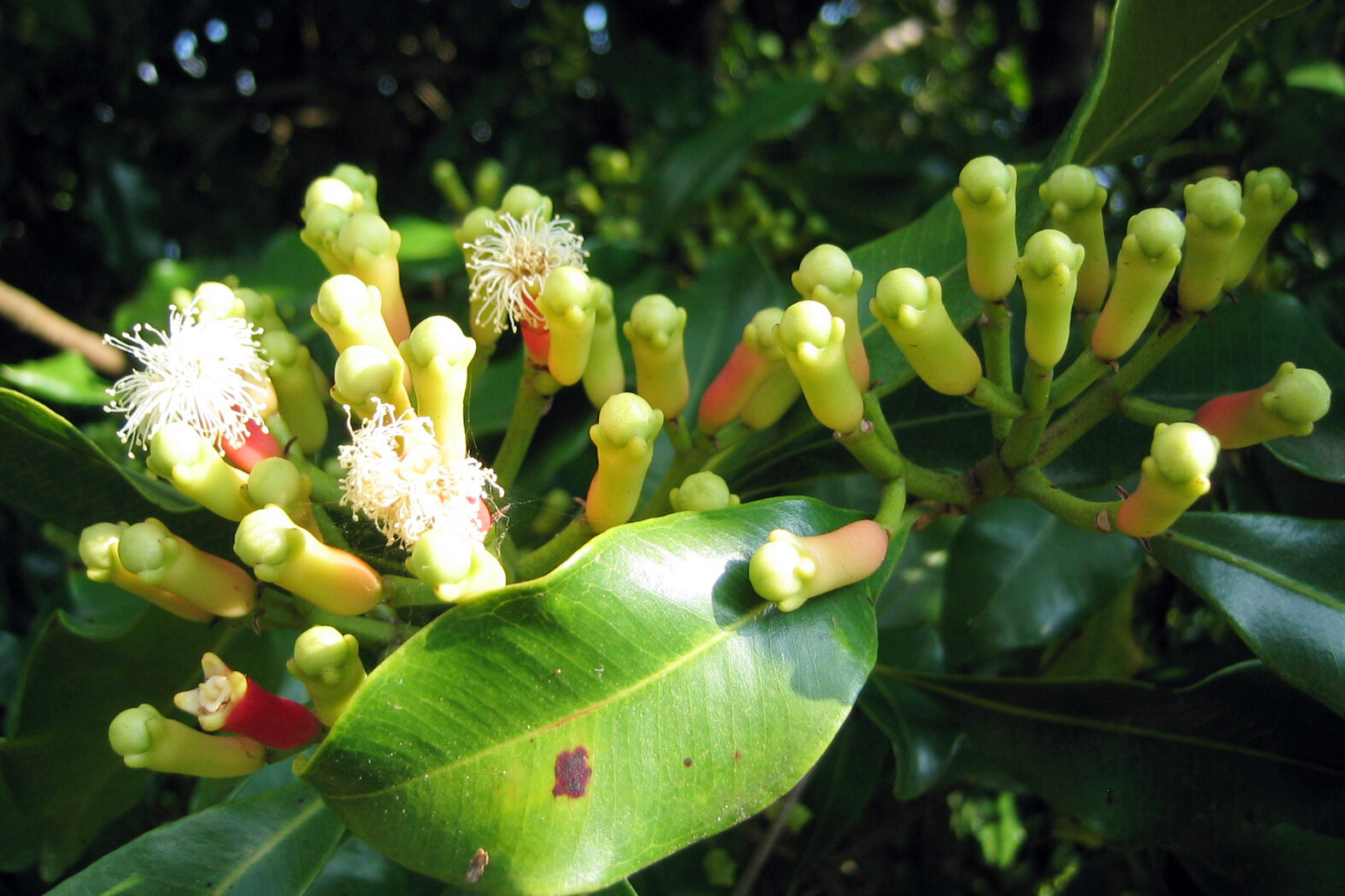
A precise harvest
Syzygium aromaticum is native to Maluku in Indonesia. A grower harvests swelling buds before they open, then dries them to the dark, nail-like spice. Each bud condenses the scent of a living tropical tree into something small enough to travel.
Evidence of older networks
At the ancient port of Mantai in Sri Lanka, archaeologists recovered a charred clove among plant remains. The find points to Asian maritime connections before European colonial control of the spice trade. A single recovered bud cannot reconstruct the vessel, merchants or complete route that carried it, but it gives material evidence of movement.
European efforts to control clove supply later brought coercion and violence to the islands. A story centered only on European demand erases earlier island cultivation and exchange. The atlas therefore describes the route as a selected journey and the passport starts with the plant and its Maluku home.
In the kitchen
Clove's aroma is assertive. Whole buds can perfume rice, broths or sweets and are often removed before eating; a little ground clove can change a whole blend. Its essential oil is much more concentrated than the spice used in food.