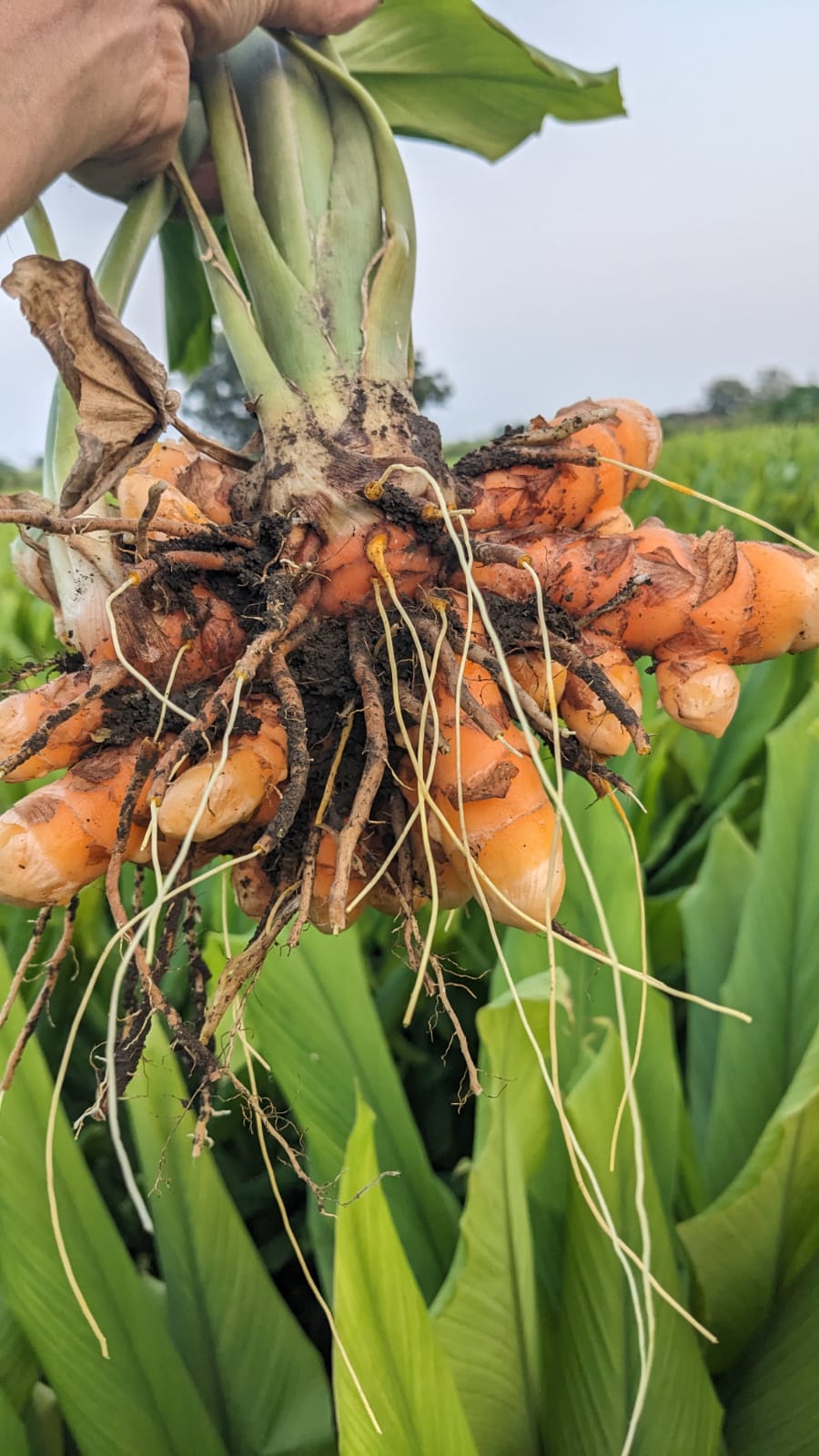
Color from an underground stem
Curcuma longa belongs to the ginger family. The commercial spice comes from its underground rhizomes, which are harvested, cured and dried. Fresh slices stain fingers orange; ground turmeric can color rice, sauces and pickles with a small spoonful.
Turmeric has roles beyond food in South and Southeast Asian traditions. The context of a ceremony, a household preparation and a culinary recipe cannot be collapsed into a single claim about what the plant “does.”
What researchers actually study
Curcumin is one of the turmeric compounds responsible for its yellow color. Clinical studies often use capsules or extracts with different amounts and formulations, sometimes combined with other ingredients to change absorption. Those studies do not test the same exposure as seasoning a meal.
The U.S. National Center for Complementary and Integrative Health says there is not enough evidence to definitively conclude that turmeric or curcumin is beneficial for any health purpose. It also notes reports of liver injury associated with some formulations designed for higher absorption.
Keep the contexts distinct
The food story is about flavor, color and technique. The cultural story belongs to the people and practices that carry it. The clinical story requires carefully designed human studies and attention to product formulation. All three deserve room, without turning tradition into a treatment promise.